Background
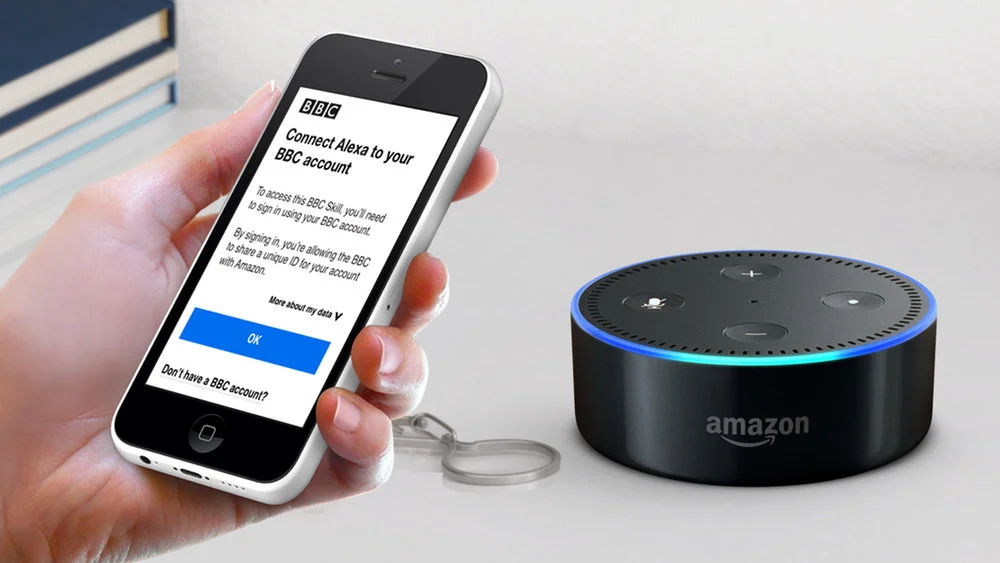
The BBC wanted to develop a BBC listening experience for a Voice UI. This would let users listen to BBC radio and podcasts using devices such as the Amazon Echo. The service would be behind BBC ID, enabling the BBC to personalise the experience based on the users existing habits on bbc.co.uk.
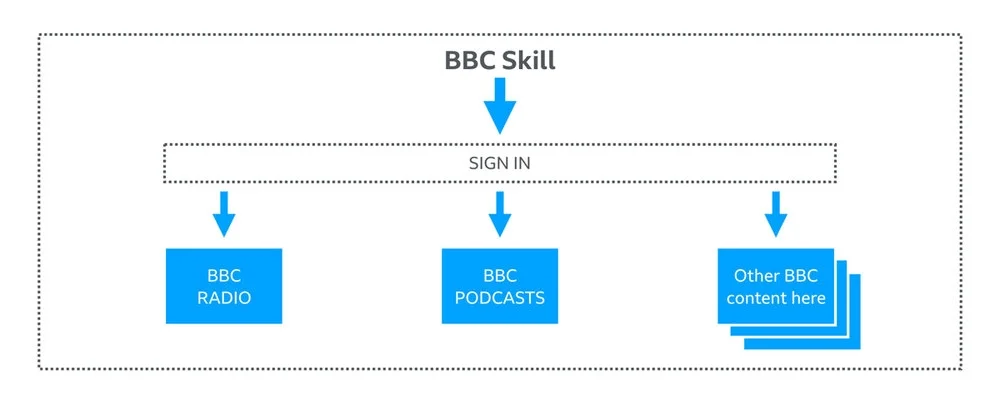
An illustration to explain how users will need to sign in to the BBC Skill before they can listen to BBC radio, podcasts and any additional content.
Understanding a new platform
This was a brand new platform which I needed to get familiar with. I looked into market trends for audience insights, carried out competitor analysis to see who was doing what and well. I tried creating an experience map to track these findings and identify any pain points / opportunities along the way. I played this research back to both teams, communicating my learnings in a digestible way to ensure they understood a user’s experience from ordering a voice device to discovering, enabling and using their skill.
Behavioural modes
I worked alongside a design researcher to interview a group of voice users to understand their experience of using these devices. The outcome of this work formulated into a set of behavioural modes, which were similar to personas and gave us a snapshot into who we should be designing for. A challenge here was to ensure these worked alongside the BBC ID’s different user types e.g. adults, children under 18 and children under 13.
Role play to help create a voice experience
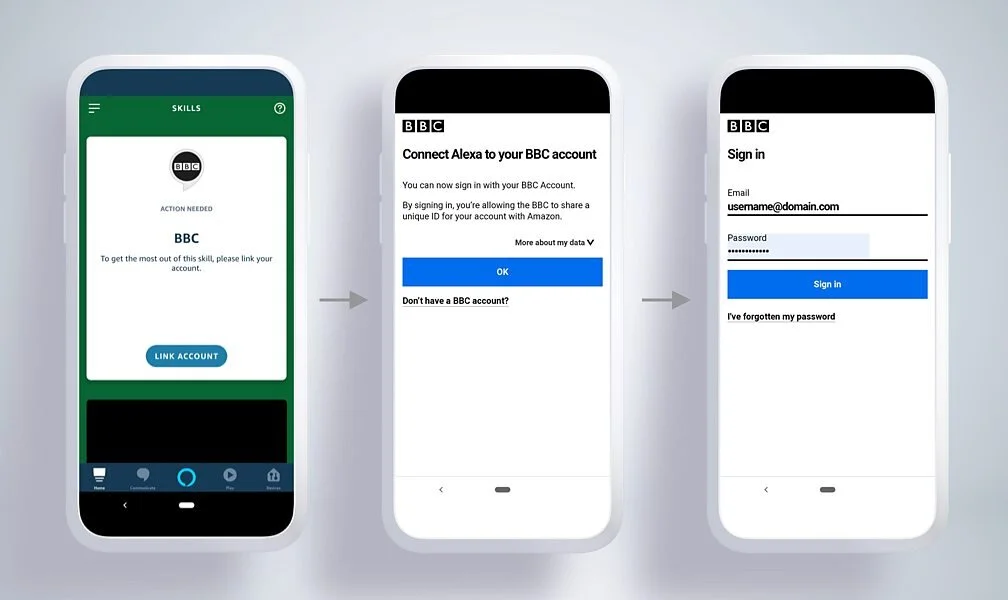
I tried out new design techniques such as role playing (Wizard Of Oz, from Talking Forms) to identify a dialogue between human and device, which helped rule out any assumptions I had about signing in using voice command. It became clear that users would not want to sign in using their voice e.g. reading out their password in front of their family/friends. I then identified ‘best practice’ recommendations from Amazon and account linking, where I found it was possible from voice command to trigger and forward users an account linking card to their Amazon Alexa app, which would act as a shortcut in pointing the user to sign into the BBC and complete the account linking process.
I also found out that there was not just one way of signing in, but three routes - through the Amazon Alexa app, through the Amazon website and through voice command.
User flows
I worked closely with the UX architect in both teams, one of those was creating the flows for the BBC skill, the other had created the flows for the sign in experience for the website. From my research we were able to capture the flows and create wireframes of the sign in experience through all routes.
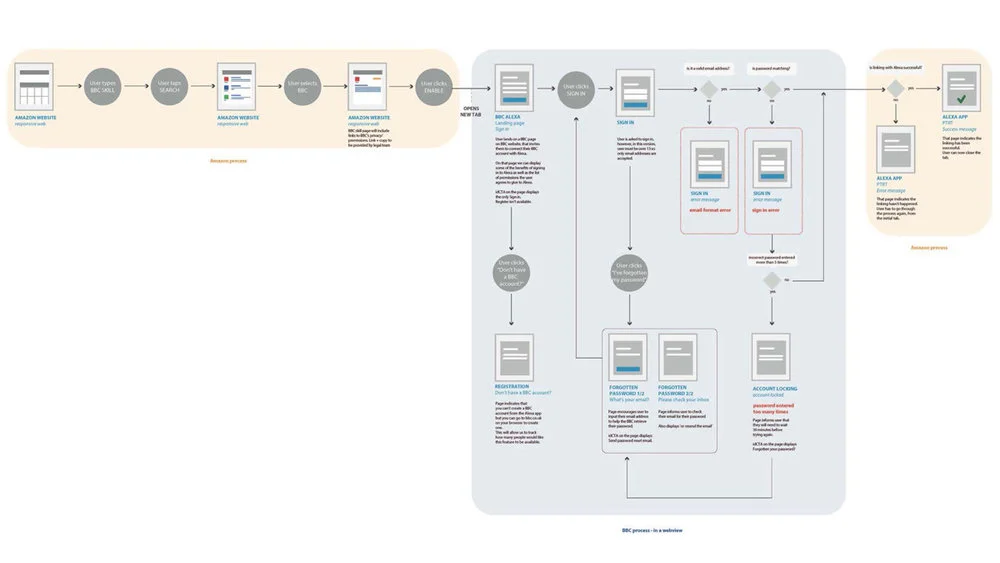
Wireframes
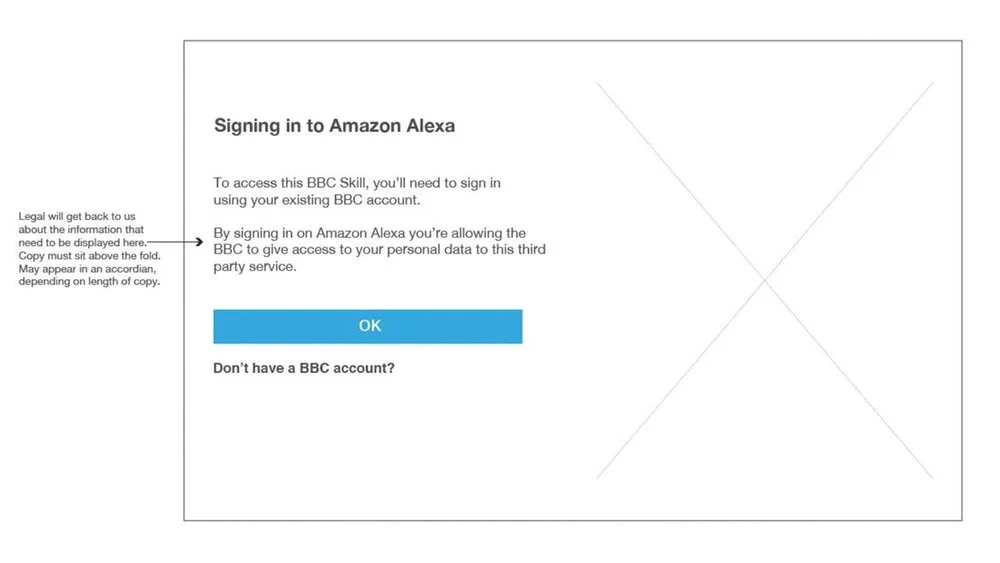
Working with a copywriter and the legal team
I worked with a copywriter to identify the correct language and tone of voice when informing the user how to account link and sign in.
Guerrilla research using voice technology
I set up and ran some user research and guerrilla tested the account linking / sign in experience using both voice and app with the clickable prototype I created from the flows and wireframes. I tested this out with 10 internal users, presented the findings back to stakeholders and made amends to the wireframes / copy based on the findings. I also arranged for some of our feedback to be played back to Amazon.
Visual design
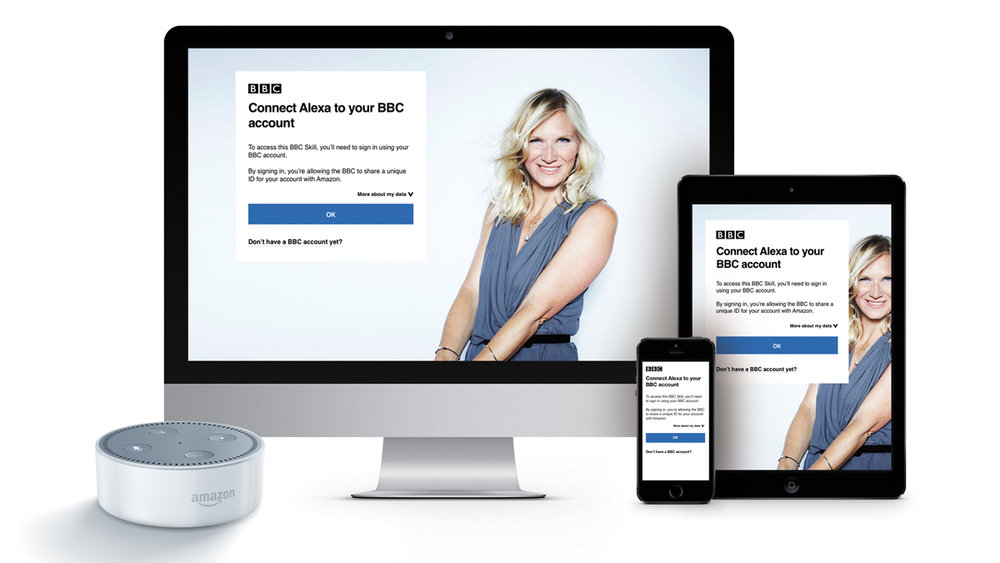
I added the visual design to the wireframes, re-using existing BBC GEL components where necessary.
Releasing beta skill and getting more user feedback
I set up and ran a second round of user feedback on the skill, this time through a group of 300 internal beta users and a survey, I collated the findings and presented this to stakeholders. Changes were made included the quality of audio sting & making it clearer which page on the app the account linking card would appear.
I then presented this work to the developers and sat with them to review and sign off build.
The launch
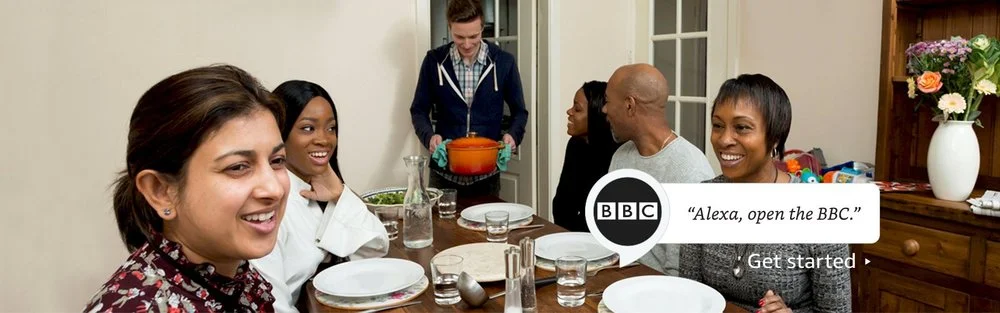
We launched the BBC Skill on Amazon Echo devices in December 2017. We designed, user tested, built and delivered a mandatory sign in experience through the Amazon Alexa App and voice command in time for launch.
A change in plan
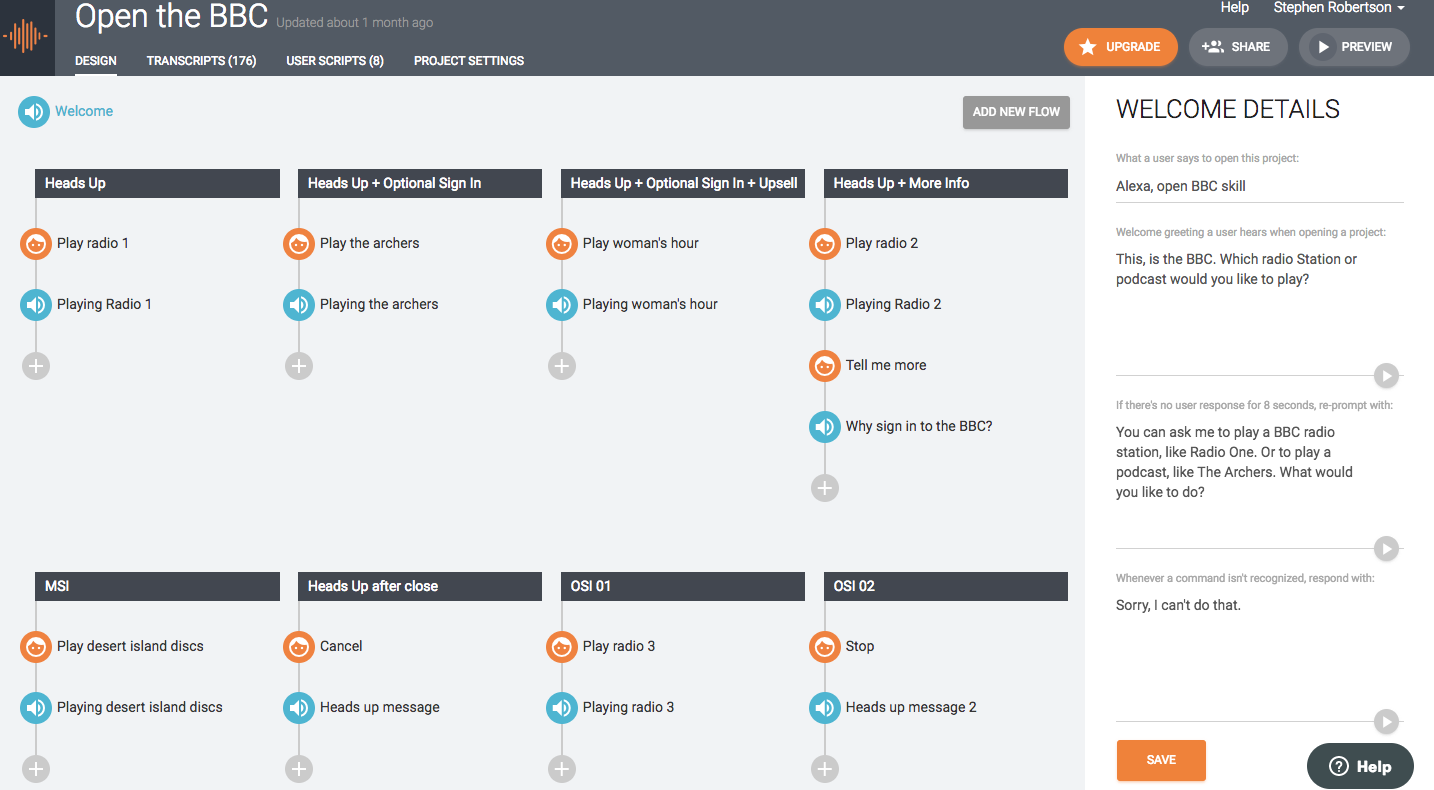
However, it was decided to hold off on mandatory sign in before we released the BBC Skill in time for the Christmas market. We were then later presented with a new problem, trying to encourage users to sign in after they had enabled the BBC skill. I helped identify and design a solution which included implementing a ‘heads up’ message during an optional sign in phase before mandatory sign in was introduced.
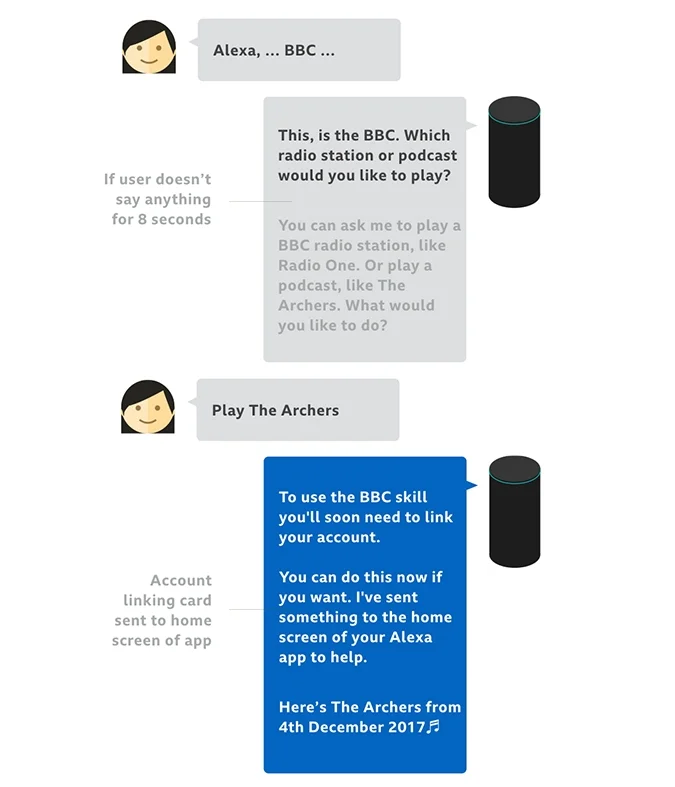
Using different tools and techniques to emulate the Amazon Echo
Outcome
Users now need to sign in to their BBC account to access the BBC Skill.